

Snoring in Mumbai: Causes, Symptoms, Diagnosis and Treatment


Snoring is often treated as a simple nighttime disturbance, but persistent or loud snoring can sometimes indicate an underlying problem with the upper airway. It occurs when airflow becomes restricted while sleeping, causing relaxed tissues in the nose, throat, soft palate, or other parts of the airway to vibrate. Although occasional snoring may not be concerning, frequent snoring accompanied by breathing pauses, choking, or daytime tiredness should be professionally evaluated.
For individuals experiencing persistent snoring in mumbai, understanding the underlying cause is important. An experienced ENT specialist can assess the nose and throat, identify potential airway obstruction, and determine whether the symptoms could be associated with obstructive sleep apnea (OSA).
What Causes Snoring?
Snoring happens when air does not move freely through the upper airway during sleep. As the airway becomes narrower, surrounding tissues may vibrate and create the familiar snoring sound.
Several factors may contribute to the condition, including:
Nasal congestion or chronic nasal blockage
Deviated nasal septum
Nasal polyps
Enlarged tonsils or adenoids
Relaxation of the soft palate and throat muscles
Excess body weight
Increased neck circumference
Sleeping on the back
Smoking
Alcohol consumption before bedtime
The underlying cause can be different for every individual. This is why an examination by an ENT specialist can be useful before deciding on a treatment approach.
The snoring-treatment guidance provided by Voice of ENT explains that persistent snoring can be associated with airway narrowing and, in some patients, obstructive sleep apnea. Nasal endoscopy, sleep studies and airway imaging may help doctors understand where airflow is being restricted.
When Can Snoring Indicate Sleep Apnea?
Not every person who snores has sleep apnea. However, certain symptoms can indicate that nighttime breathing deserves further investigation.
Warning signs may include:
Loud or persistent snoring
Pauses in breathing noticed by a sleeping partner
Gasping or choking during sleep
Frequent nighttime awakenings
Excessive daytime sleepiness
Morning headaches
Difficulty concentrating
Waking with a dry mouth
Feeling tired despite getting sufficient sleep
Obstructive sleep apnea occurs when the upper airway repeatedly becomes narrowed or blocked during sleep. These interruptions can affect normal sleep patterns and oxygenation.
People with factors such as obesity, nasal obstruction, a thicker neck, smoking, or alcohol consumption before bedtime may have an increased risk of sleep-disordered breathing.
Why an ENT Evaluation Is Important
Snoring is not caused by one specific problem in every patient. The obstruction may originate in the nose, soft palate, tonsils, or deeper parts of the throat. An ENT evaluation helps identify the possible source.
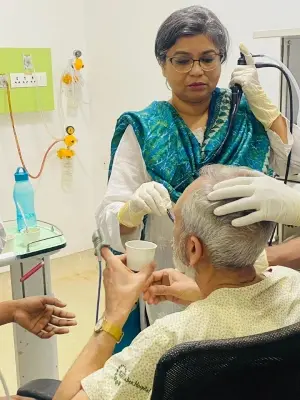
A consultation may begin with a detailed discussion of sleep symptoms, medical history, lifestyle factors, nasal breathing and daytime fatigue. The specialist may then examine the nose and throat.
Depending on the symptoms, diagnostic evaluation can include:
Nasal Endoscopy
Nasal endoscopy allows the doctor to examine the nasal passages and identify conditions such as structural narrowing, polyps, or other sources of obstruction.
Overnight Sleep Study
When sleep apnea is suspected, polysomnography or another appropriate sleep study can assess breathing patterns and sleep-related disturbances.
Airway Assessment
In selected cases, additional airway imaging or evaluation may be considered to understand the location and severity of obstruction.
The goal is to establish an individualized diagnosis rather than assuming that every patient requires the same treatment.
Treatment Options for Snoring
Treatment depends on the underlying cause, severity of symptoms, anatomy of the airway, and whether sleep apnea is present.
Lifestyle Modifications
For some patients, lifestyle changes can help reduce symptoms. Maintaining a healthy weight, avoiding alcohol close to bedtime, stopping smoking and changing sleeping position may be beneficial.
Sleeping on the side rather than the back can be particularly helpful for some people with positional snoring.
CPAP Therapy
Continuous positive airway pressure, commonly known as CPAP, may be recommended for patients diagnosed with obstructive sleep apnea, particularly when the condition is moderate or severe.
CPAP provides continuous airflow through a mask to help maintain airway openness during sleep. Its suitability should be determined following appropriate medical assessment.
Treatment of Nasal Obstruction
Nasal blockage can contribute to restricted nighttime breathing. Conditions such as a deviated nasal septum or nasal polyps may require medical management or, in selected patients, surgical correction.
The snoring-treatment source specifically discusses nasal surgery for structural problems such as septal deviation or nasal polyps when clinically indicated.
Palate and Tonsil Procedures
If the soft palate, tonsils, or other throat structures contribute to airway narrowing, selected procedures may be considered. These can include radiofrequency or laser-based tissue treatment and palate or tonsil procedures when appropriate.
Surgery is not necessarily required for everyone. Non-invasive approaches may be effective depending on the cause and severity of the problem.
Why Choose Dr. Shama Kovale?
Dr. Shama Kovale is a senior ENT surgeon with more than 23 years of clinical experience. She holds MBBS, DLO and MS in ENT from B.Y.L. Nair Hospital, Mumbai. Her advanced professional training includes specialized training in Voice and Swallowing Disorders from UC Davis, California, a Laryngology Fellowship at Bombay Hospital, Mumbai, and cochlear implant training at P.D. Hinduja Hospital.
Her clinical expertise extends across ear, nose and throat disorders, voice and swallowing conditions, airway concerns, cochlear implants and endoscopic ENT surgeries. Her profile also highlights her role as a Senior Consultant at Kokilaben Dhirubhai Ambani Hospital and her leadership of a dedicated Voice and Swallowing Centre.
This combination of extensive ENT experience and specialized airway-related expertise can be particularly valuable for patients whose snoring may be associated with nasal or upper-airway obstruction.
For patients searching for the Best ENT in Mumbai, Dr. Kovale offers an approach focused on understanding the patient’s symptoms, explaining the diagnosis and developing an individualized treatment plan.
A Patient-Centred Clinic Environment
Kokilaben Dhirubhai Ambani Hospital provides an advanced clinical environment for ENT assessment and treatment. Dr. Kovale’s practice includes specialized services for voice, swallowing and airway conditions, along with endoscopic ENT procedures.
Her profile emphasizes a patient-centred approach in which patients are guided through their diagnosis and treatment options. The Voice and Swallowing Centre provides specialized assessment and management for a range of common and complex ENT conditions.
The broader Voice of ENT practice also includes an Endoscopic ENT & Nasal Clinic and an Airway Clinic for evaluation and treatment of nasal problems, noisy breathing, sleep-related airway concerns and upper-airway disorders.
Patients searching online for ENT Specialists Near Me in Mumbai should consider professional assessment when snoring is persistent, disruptive, or accompanied by symptoms that could suggest sleep-disordered breathing.
When Should You Consult an ENT Specialist?
An ENT consultation may be appropriate if:
Snoring occurs frequently or is unusually loud.
Your partner notices pauses in breathing.
You wake up gasping or choking.
You experience excessive daytime sleepiness.
You regularly wake with headaches or dry mouth.
You have chronic nasal blockage.
Your sleep quality has deteriorated.
Snoring is affecting your partner’s sleep.
Home measures have not improved the symptoms.
Early evaluation can help determine whether the problem is simple snoring, nasal obstruction, or a more significant sleep-related breathing disorder.
Take the Next Step Towards Better Sleep
Persistent nighttime breathing problems should not simply be ignored. Identifying the cause can help determine whether lifestyle measures, medical management, CPAP, nasal treatment, or an appropriate procedure may be required.
Dr. Shama Kovale combines more than two decades of ENT experience with specialized training in voice, swallowing and airway-related care. Her patient-focused approach emphasizes accurate evaluation and personalized treatment at Kokilaben Dhirubhai Ambani Hospital.
Schedule Your Consultation Today
Consult Dr. Shama Kovale at Kokilaben Dhirubhai Ambani Hospital for timely evaluation and expert hearing care.
Give Us a Ring: +91-91528 50769
Email: drshamakovaleent@gmail.com
Frequently Asked Questions
1. Is snoring always a sign of sleep apnea?
No. Snoring can occur without sleep apnea. However, loud and persistent snoring combined with breathing pauses, choking, gasping or daytime sleepiness should be evaluated by an ENT or sleep specialist.
2. Can lifestyle changes reduce snoring?
Yes. Depending on the cause, maintaining a healthy weight, avoiding alcohol before bedtime, stopping smoking and sleeping on your side may help reduce snoring. Persistent symptoms should still be professionally assessed.
3. Which doctor should I consult for snoring?
An ENT specialist can examine the nose, throat and upper airway to identify potential causes of snoring. If sleep apnea is suspected, the specialist may recommend an appropriate sleep study.
4. Is surgery always required for snoring?
No. Treatment depends on the underlying cause. Lifestyle changes, positional therapy, medical treatment and CPAP may be suitable for some patients. Procedures or surgery may be considered when an anatomical obstruction is identified or when other treatment approaches are insufficient.



Comments